
The Short Answer
Replace worn weatherstripping, lubricate the moving hardware, test the auto-reverse safety sensors, and check that the opener has battery backup before the winter rains arrive. Those four steps handle most of what changes when Temecula shifts from a dusty, dry fall into a wetter, cooler season.
Why Winter Is Different Here
Temecula doesn't get harsh winters, but the shift still stresses a garage door system. Summer and fall leave tracks and rollers coated in fine dust, and that grit mixes with the first real rains to form a gritty paste that grinds down hardware faster than dry dust alone. Nighttime temperatures also drop more than people expect for inland Southern California, and that swing between a cool morning and a warmer afternoon makes metal springs and tracks expand and contract slightly, which can turn a small alignment issue into a bigger one over a season. None of this is dramatic, but it's exactly the kind of slow wear that shows up as a noisy, sticky, or unevenly moving door by January.
Clean Out the Dry-Season Buildup First
Before you do anything else, wipe down the tracks with a damp cloth to remove dust and cobwebs. Check the bottom seal (the rubber strip along the floor) for cracks or flattening — this is the part most exposed to blowing dust all summer, and it's also your main defense against rain intrusion once winter rains start. If it's cracked, brittle, or no longer makes full contact with the floor, replace it now rather than after the first storm.
Weatherstripping and Seals
- Bottom seal: Should sit flush against the garage floor with no daylight showing through. Replace if cracked or compressed flat.
- Side and top seals (weatherstripping): Check for gaps where wind-driven rain could get pushed in, especially on doors facing the prevailing weather.
- Panel seams on sectional doors: Older doors can develop small gaps at the panel joints; weatherstripping kits made for this are inexpensive and take under an hour to install.
Lubrication and Hardware
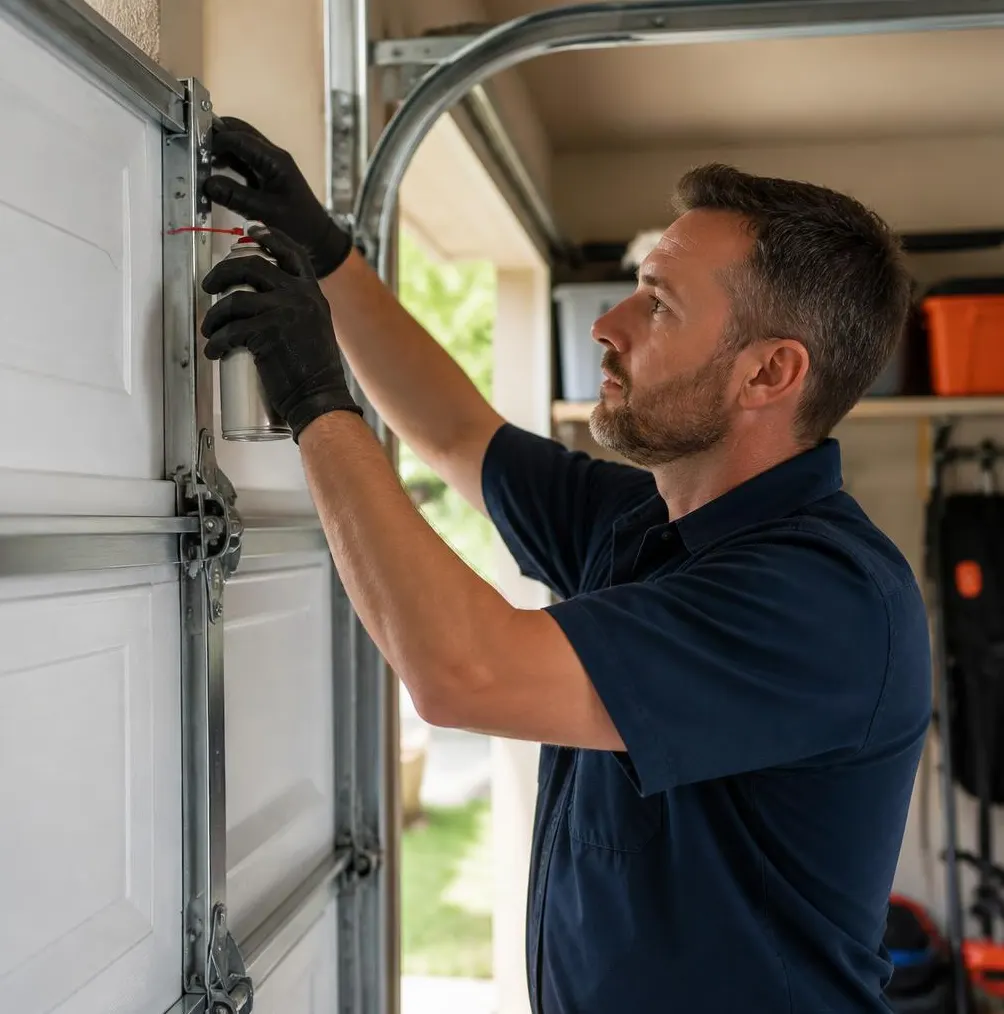
Use a garage-door-specific lithium or silicone-based lubricant (not household oil, which attracts dust) on rollers, hinges, and the torsion spring. While you're in there, look for rust starting on bolts or hinges — anything near the bottom of the door that catches splashback during rain is worth watching. Tighten any visibly loose hardware; vibration from daily use loosens bolts gradually, and a loose bracket is more likely to work free when the door is working harder against colder, stiffer hardware.
Balance and Safety Sensor Test
Disconnect the opener and lift the door halfway by hand. It should stay in place on its own. If it drifts up or falls, the spring tension is off and the door is working harder than it should — this is also when strain on an aging spring tends to turn into a sudden break, often on the first cold morning you use it. Separately, wave a broom handle in front of the photo-eye sensors near the floor while the door is closing; it should reverse immediately. Rain and condensation can fog these sensors or shift their alignment slightly, so this is worth testing at the start of the season, not just when something goes wrong.
Opener Battery Backup
Winter storms bring power outages. If your opener doesn't have a battery backup, check whether your model supports adding one — it's a small investment that means you're not stuck manually hoisting a heavy door in the rain because the power's out.
Insulation Worth Considering
If your garage shares a wall with living space, or you use it as a workspace, an insulated door (or an insulation retrofit kit for an existing door) keeps temperature swings from affecting the rest of the house and cuts down on condensation forming on the inside of an uninsulated metal door during cool, damp mornings.
When to Call Temecula Door & Opener
If your door isn't balanced, the spring looks worn or stretched, or the opener keeps misfiring on the sensors after you've cleaned them, it's time to call in a technician rather than keep adjusting things yourself — a mistimed spring replacement is a serious safety risk. We handle spring replacement and preventive maintenance visits that cover the full seasonal checklist above, including a proper balance test and hardware inspection, so the door is ready before the first real storm rolls through.
If you're in Temecula, Murrieta, Menifee, or anywhere else in the Temecula Valley and want your garage door checked before winter rain sets in, call Temecula Door & Opener today to schedule a visit.